
Wow, this surprised me. Solana moves fast and it shows. My first impression was simple excitement, then some anxiety set in as I watched blocks pile up and fee curves wiggle. Initially I thought on-chain analytics would be straightforward, but then I realized that raw throughput creates noise that masks the signal. Something felt off about relying on one metric alone, and I kept coming back to transaction traces and account state changes to make sense of activity.
Okay, so check this out—I’ve been poking around Solana explorers for a while. Seriously? The UX varies wildly between tools, and that inconsistency bugs me. On one hand you get blazing speed and near-instant confirmations, though actually when you’re debugging a failed CPI call you need richer traces than the default block view provides. My instinct said use multiple sources, but I’m biased toward explorers that let me drill down into instruction logs and rent-exempt balances. I’ll be honest: somethin’ about missing logs makes me double-check wallets manually sometimes.
Wow, that’s surprising. NFT tracking on Solana is a different beast compared with Ethereum. Many NFTs use Metaplex metadata standards, and while that’s helpful it also means metadata can be off-chain or mutable, which complicates provenance checks. Initially I thought token mint addresses would be enough to establish lineage, but then realized that creators sometimes re-mint or transfer metadata hosting, so transaction histories and creator addresses matter a lot. For NFT collectors I recommend combining mints, recent transfers, and marketplace listings when assessing authenticity.
Hmm… this part gets practical. Wallet clustering and token ownership snapshots are essential when you want to spot wash trading or coordinated drops. You can infer suspicious patterns by correlating rapid transfers with identical sale prices or repeated interactions through one intermediary account, though false positives happen so be cautious. Something I do: export recent transactions for an address and then scan instruction-level logs for repeated program IDs or repeated seller addresses. It’s a bit manual, but that extra step often reveals the story behind price movements.
Whoa! There are common gotchas. RPC endpoints sometimes return stale data under heavy load, and that can mislead charting tools that assume consistent updates. Actually, wait—let me rephrase that: it’s not just staleness, it’s also partial replays where the mempool activity and final confirmed order differ, and you should cross-verify with the finalized slot data before drawing conclusions. When I’m building dashboards I always pull both “confirmed” and “finalized” states and reconcile them, because otherwise revenue attribution or tax records become messy. Small differences add up, and they matter for treasuries and audits.
Wow, here’s the thing. Filters and queries are your friends when you want to scale analytics beyond a handful of wallets. Use program-ID based scans to catch all interactions with specific smart contracts, and combine those with token metadata queries if you care about NFTs. My workflow often includes batching RPC calls and then normalizing fields into a local time-series for faster analysis; it’s clunky but effective. On the rare occasions when I need deeper context—like preimage data or raw logs—I replay transactions through a full node snapshot so I can step through events in order.
Wow, very very important. Security hygiene matters almost as much as analytics. Seed phrase safety, using hardware wallets, and validating contract addresses before approving transactions are basics everyone should follow. I am not 100% sure people appreciate how often phishing pages copy explorer interfaces, so double-check the URL and the domain when you paste an address into a public tool. (oh, and by the way…) keep a small, isolated account for interacting with unknown dApps—it’s saved me headaches.
Wow, careful now. When choosing an explorer I care about feature depth and data freshness. Some explorers give you great visualizations but thin instruction logs; others expose every inner instruction but feel overwhelming for newcomers. My method is pragmatic: start with a quick overview, then click into instruction-level details when the situation demands it, and don’t trust a single snapshot for final decisions. Over time you build heuristics—like which program IDs frequently indicate liquidity operations versus NFT mints—and those patterns save time.
My preferred explorer and why
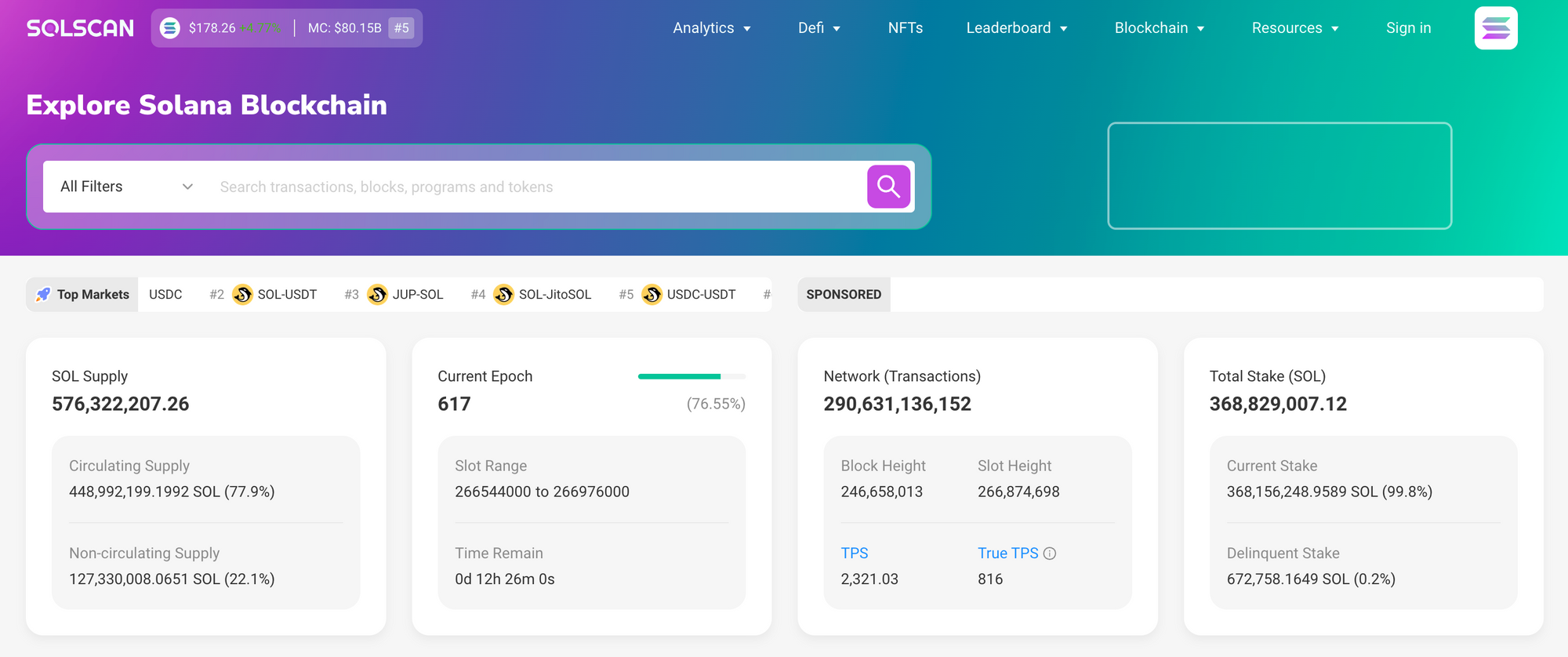
I’ll be direct: I’m partial to explorers that balance speed with deep traceability, which is why I often recommend checking the solscan explorer official site as a starting point when you need both clarity and depth. The interface surfaces token transfers, instruction logs, and token metadata in ways that make it easier to spot anomalies, though no tool is perfect and you should cross-check when stakes are high. Something I like: exportable CSVs for transaction batches, which accelerate ad-hoc analysis without building a full ETL pipeline. My instinct says use that as one node in a broader workflow, not as the sole truth.
Really? Here’s a short checklist I use before trusting analytics output. First, verify slot finality. Second, confirm the program IDs involved. Third, check token metadata and recent ownership transfers. Fourth, look for repeated intermediary addresses that might indicate wash trades. Fifth, cross-reference marketplace records or off-chain announcements if price flashes don’t match on-chain flows.
Common questions
How can I track a specific NFT collection across wallets?
Start with the collection’s creator address and the primary mint addresses, then query program-specific instructions for transfers and sales. Use metadata hashes to validate the on-chain pointer versus off-chain hosting, and export recent transactions to detect concentration of ownership or unusual transfer cadence. If something looks off, trace prior holders and check for coordinated movement across a small set of wallets.
Why do explorers show different transaction counts?
Explorers may pull data from different RPC endpoints or cache states differently, and they may interpret “confirmed” versus “finalized” slots in separate ways. Sometimes mempool reorgs or skipped blocks lead to transient mismatches, which is why reconciling with the finalized chain state is essential for accurate reporting. My rule: favor finalized data for any audit or legal use.
What are practical steps to avoid fraud when trading NFTs?
Double-check mint addresses, validate metadata sources, and keep an eye on rapid price changes that don’t match volume trends. Use a hardware wallet for approvals, and avoid pasting your seed into untrusted pages; scammers are sneaky and they clone explorer layouts sometimes. If in doubt, pause the trade, ask in community channels, and get a second pair of eyes—it’s saved me from a bad flip more than once.